
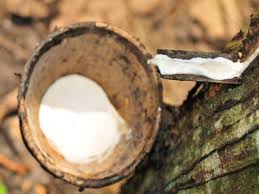
Thai rubber output seen dropping 10 pct in 2014 – rubber assoc
KUALA LUMPUR: Rubber output in top producer Thailand may fall as much as 10 percent this year as plummeting prices drive away tappers, a senior industry official said on Monday, reversing earlier estimates for output to increase.
The change in the forecast came as members of the Association of Natural Rubber Producing Countries (ANRPC), which account for more than 90 percent of natural rubber output, met in Kuala Lumpur to discuss more drastic measures to tackle the slump in rubber prices caused by feeble demand.
The drop in Thailand’s output and stronger domestic consumption may help eat into Thai stockpiles, lending support to rubber prices that have fallen below production costs and sent benchmark futures to five-year lows.
“I think for this year in Thailand, you won’t see a production number of 4 million tonnes,” said Paitoon Wongsasutthikul, deputy secretary-general of the Thai Rubber Association, who was in Malaysia for the ANRPC meeting. “I doubt you can get close to 3.8 million tonnes, because the declining price of rubber has discouraged people from tapping.”
In May, the Thai Rubber Association had said it expected rubber output to grow as much as 5 percent.
Indonesia, the world’s No.2 rubber producer, has urged suppliers since the end of September to not sell at less than $1.50 per kilogram. The move was welcomed by other major players Thailand, Malaysia and Vietnam, although scepticism remained on how effective the floor price will be.
Wongsasutthikul said that abnormal weather in Thailand has also made it difficult to source rubber.
Data from Thailand’s Rubber Research Institute showed the country churned out 1.65 million tonnes of rubber in the first half of 2014, he said. Exports were at 1.5 million tonnes, while domestic consumption was at 300,000 tonnes.
Thailand produced 4.17 million tonnes of rubber in 2013, about 37 percent of global output and up from 3.78 million in 2012, according to the ANRPC.
Wongsasutthikul said 60 percent of Thailand’s total annual output is typically produced in the first six months of a year, with the remaining 40 percent in the second half.
He expects domestic consumption for this year to rise to about 550,000 tonnes, up from 521,000 tonnes in 2013.
That means end-year stocks to carry over to next year will be less than last year, because exports and domestic consumption will have exceeded production, he said.
“This is a good sign for the market.”
Benchmark rubber futures on the Singapore Exchange remained below $1.50 per kg on Monday, trading at 146 U.S. cents per kg, not far above the Oct. 1 trough of 137.40 U.S. cents, its weakest point since March 2009.
ZONING SYSTEM
Wongsasutthikul said to tackle concerns of supply exceeding global demand, the Thai government is considering to implement a zoning system to limit the areas where farmers can plant rubber trees, but added that implementation would be challenging.
“It’s difficult especially in Thailand where you have a lot of smallholders. How to tell them you can only plant your trees in certain zones?”
He said that giving incentives such as subsidized fertilizers or cash subsidies to farmers who plant trees only in the allocated zones could help the government implement a zoning policy, and allow better documentation of rubber acreage.