
Conti begins making tires made of dandelion latex
HANOVER, Germany—Continental A.G. has begun building test tires made with rubber derived from the latex of dandelions and projects serial production using the rubber could start as soon as in 10 years.
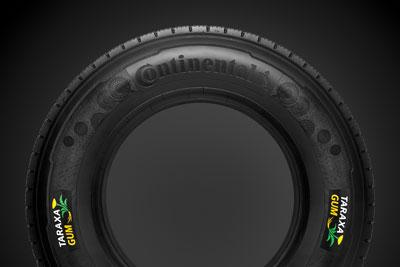
Continental displayed the first test tires made from the dandelion-derived rubber at the International Motor Show Commercial Vehicles in Hanover this week. Conti has coined the name Taraxagum, derived from the botanical name for dandelion (taraxacum), for the material.
The tires, winter passenger tires, were built with treads using Taraxagum in place of conventional natural rubber. Continental said this development takes it closer to reaching its goal of making tire production more sustainable and less dependent on traditional raw materials.
“After several years of development work together with the Fraunhofer Institute, we are excited to take the first dandelion tires to the road,” said Nikolai Setzer, member of the Continental executive board responsible for the Tire Division.
“In order to make the best use of the crop yield produced to date, we decided to build passenger car winter tires, as they contain a high portion of natural rubber,” he said.
The tires will undergo thorough testing at the Contidrom proving grounds near Hanover as well as in Arvidsjaur, Sweden.
Continental said it intends to industrialize dandelion rubber and introduce it to serial production within the next five to 10 years.
Continental and Germany’s Fraunhofer Institute for Molecular Biology and Applied Ecology in Aachen disclosed their joint venture to produce industrial rubber made from dandelions last October. The project also involves the Julius Kuehn-Institute and the plant breeder Aeskulap GmbH.
“The development process of Taraxagum has been very promising so far and we are continuing the industrialization together with our partners,” said Andreas Topp, head of material and process development and industrialization for tires at Continental.
“We are very confident that our current research results will be confirmed through the tire tests and that they will meet the performance targets.”
The project’s long-term goal is to find an ecologically, economically as well as socially viable solution for the increasing demand for natural rubber, Conti said.
Russian dandelion can be cultivated on previously unused acreages in temperate regions throughout Europe, which are also close to Continental’s tire plants. This shortens transport routes and reduces the environmental impact.
In May 2014, the dandelion rubber project was awarded the environmental and economic prize GreenTec Award in the automotive category.