
Philippines: South Cotabato eyes expansion of rubber, other high value crops
KORONADAL CITY, South Cotabato, March 8 (PIA) — South Cotabato officials are pushing for the planting of more rubber trees in the upland area this year as it sees the crop’s potential as a source of income.
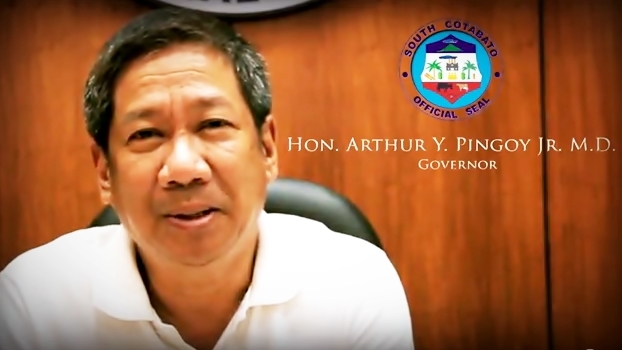
Gov. Arthur Y. Pingoy Jr. has recently asked OPAG to fast track the expansion of the rubber development program especially in the remote barangays and watershed areas. Pingoy said, this is also a means to lure away residents to resort to illegal activities such planting of marijuana. Just recently, police authorities uprooted P5-million worth of marijuana plants in remote sub-villages in Barangay Salacafe, T’boli.
In response to the governor’s directive, provincial agriculturist Reynaldo Legaste said they are encouraging farmers to try rubber and other high value crops .
Legaste reported the rubber development program they implemented three years ago in Lake Sebu has already gained grounds.
He said 157 hectares in Barangay Lamdalag have been planted to rubber out of the P10 million support from the Department of Agriculture, provincial government and LandBank of the Philippines.
With wider areas being targeted for rubber planting this year, the provincial agriculturist encouraged local nursery operators to produce quality planting materials. He said they may require at least 40,000 quality rubber seedlings.
“Our purpose for encouraging production of rubber was not only to improve the living standards of the farmers but also for environmental protection because the area is a watershed of the Ala River Irrigation System,” Legaste said.
A hectare of rubber, he added, could earn a farmer between P12,000 to P15,000 monthly income starting on the sixth and seventh years when the trees can already be tapped for their latex.
He also assured technical support are available to farmer groups who would like to venture into production of this crops.
Farmers who have availed of the first tranche of rubber development support were brought to the state-owned University of Southern Mindanao in Kabacan, Cotabato for an orientation on rubber production and to rubber plantations, processing plants and nurseries in Kidapawan and Makilala for an educational tour.
“Once the trees are ready for tapping we will be training local farmers to become certified tappers,” he said.
Support on technology, training, processing and other aspects of rubber production is also assured because South Cotabato is a member of the Cotabato Agricultural Resources Research and Development Consortium (CARRDEC), which has a pool of researchers and scientist who are ready to extend their expertise, Legaste added.
Besides rubber, OPAG is also encouraging farmers to plant other high value crops, such as coffee and cassava.
Legaste said that the 157-hectare plantation in Lake Sebu were intercropped with 24,000 hills of coffee, which have started to bear flowers one year and two months after planting.
“In July this year, we aim to plant additional 60,000 seedlings of coffee,” he said.
Aside from the local government-supported program, private investors have been considering the province for their expansion in high value crops.
A private company based in Metro Manila has been in constant communication with OPAG for their plan to establish plantations for rubber, cassava, and coffee production. Legaste said the company is looking for 1,000 to 3,000 hectares to be devoted to each crop commodity. (DEDoguiles/PIA 12)